Trying to choose between a Baltimore rowhome and a condo? You are not alone, and the decision is about more than style or curb appeal. In Baltimore, both property types have active buyer demand, but the day-to-day ownership experience can feel very different. If you want a clearer way to compare costs, control, upkeep, and resale factors, this guide will help you sort through the tradeoffs. Let’s dive in.
Baltimore offers both options
Baltimore is a balanced housing market, with a median listing price of about $235,000 and roughly 4,500 homes for sale. Current listing data also shows much more townhome inventory than condo inventory, so you are not comparing a niche product to a dominant one. You are comparing two common paths to homeownership with different responsibilities.
That inventory gap is worth noting. Realtor.com data shows about 3,054 townhomes for sale in Baltimore versus 424 condos. In practice, that usually means rowhomes offer more neighborhood variety and more price points, while condos may offer fewer choices in a given search range.
What you own is different
Condo ownership is shared by design
In Maryland, condo ownership is split between your unit and the building’s common elements. You own the unit itself, while the council of unit owners is responsible for maintaining, repairing, and replacing the common elements.
That legal structure shapes the whole ownership experience. A condo often feels more shared, more document-driven, and more rule-based because part of the property is managed collectively.
Rowhomes usually give you more direct control
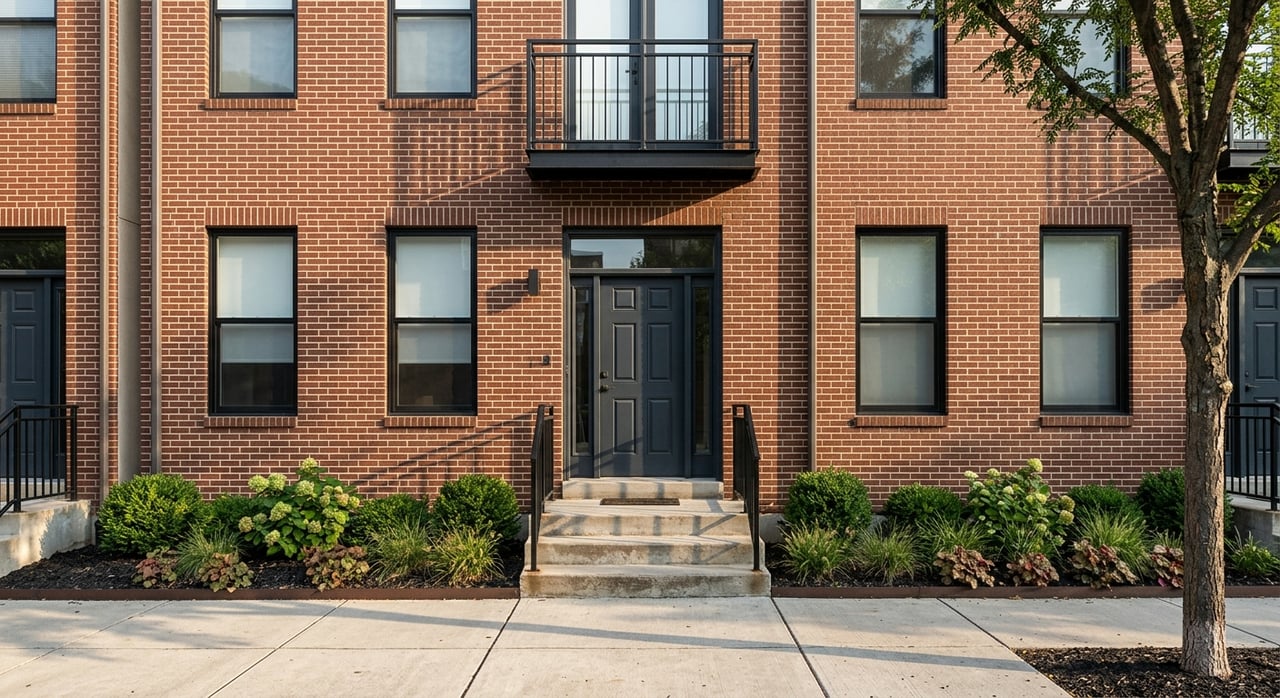
Baltimore rowhomes are one of the city’s signature housing types. Many neighborhoods, including areas like Fells Point, Riverside, Remington, and Otterbein, include a strong rowhome presence, sometimes alongside apartments and condos.
With a rowhome, the ownership structure is usually more straightforward than a condo. You are often taking on more direct responsibility for the building itself, which can mean more freedom in some situations and more maintenance responsibility in others.
Some rowhomes still have associations
A common mistake is assuming rowhomes never come with fees or rules. In Maryland, a rowhome in a planned development may still be part of a homeowners association, which can include assessments, architectural restrictions, and required resale disclosures.
So the real comparison is not always rowhome versus condo fees. Sometimes it is a question of how much shared governance you are comfortable with, and how much of the property you want to manage on your own.
Compare your monthly and long-term costs
Condo costs are more layered
If you buy a condo, monthly association dues need to be part of your budget from the start. Maryland law also requires reserve studies and periodic updates, and condo resale disclosures must include key governing documents, prior common-element expenses, and notice of the unit owner’s responsibility for the association deductible.
That can make condo budgeting more transparent, but also more detailed. You are not just evaluating the sales price. You are also reviewing the building’s rules, reserves, expense history, and your share of future financial risk.
Insurance works differently
Insurance is one of the clearest differences between a rowhome and a condo in Maryland. According to the Maryland Insurance Administration, a standard single-family home policy such as an HO-3 generally covers the full structure, while a condo policy such as an HO-6 may cover only the interior of the unit and your contents.
Maryland does not require condo owners to carry HO-6 coverage by law, but lenders or condo documents often do. That means your insurance obligation may depend on both your financing and the building’s governing documents.
Deductibles can matter more than buyers expect
Condo buyers should pay close attention to deductible exposure. Maryland insurance guidance says that if a loss originates from your unit, you may be assessed up to $10,000 of the master policy deductible.
If the loss starts in the common elements, the deductible is generally treated as a common expense of the association. This is one reason reviewing condo documents carefully matters, especially in older buildings or communities with large deductibles.
Rowhomes may have fewer shared fees but more repair risk
A rowhome often has a simpler monthly carrying cost if there is no condo association structure. But that simplicity usually comes with a tradeoff. You are more likely to absorb building-level repairs directly instead of sharing them through association dues.
That does not automatically make a rowhome more affordable. It just means your costs may be less predictable and more tied to the condition of the specific property.
Think about maintenance and lifestyle
Condos can feel more hands-off
If you want more shared maintenance responsibility, a condo may fit better. Because common elements are maintained by the association, some exterior and building-level tasks are handled through that structure rather than by you alone.
That can appeal to buyers who prefer a more managed ownership experience. The tradeoff is that you need to be comfortable following building rules and paying monthly dues.
Rowhomes can feel more independent
If you want more direct control over your property, a rowhome may be the better fit. Many buyers like the idea of making decisions without the same level of shared governance that comes with condo living.
Still, more control usually means more responsibility. Routine upkeep, repairs, and capital improvements may fall more directly on you, unless the home is part of an HOA with its own rules and assessments.
Renovation freedom is not absolute
Historic district rules can affect rowhomes
Some buyers assume a rowhome means complete renovation freedom. In Baltimore, that is not always true. In local historic districts, city code requires permits for regulated exterior alterations, including exterior reconstruction, color changes, fences or walls, excavation, and demolition, and CHAP approval is required before the permit can be issued.
Baltimore’s zoning rules also treat upper-floor additions and roof decks on existing rowhouses as design-review items. If you are buying with renovation plans in mind, this is something to verify early.
Restrictions can support long-term value
Those rules can feel limiting, but they are not always a negative from a resale standpoint. CHAP has reported that the average current value of houses in local historic districts was more than twice the average in the rest of the city, and that local historic-district properties outperformed both National Register districts and the rest of the city over time.
That does not guarantee a premium for any individual home. It does show that preservation review and strong market performance can exist together in Baltimore.
Condo renovations usually follow building rules
Condos often offer less unilateral renovation flexibility for a different reason. You are buying the unit, not the whole building, and renovation limits are often shaped by the declaration, bylaws, and rules and regulations that buyers receive during resale disclosure.
In simple terms, condos often trade flexibility for predictability. You may have less freedom to make changes, but you also have a clearer framework for what is allowed.
Resale depends on the exact property
Demand exists for both housing types
Baltimore has a real buyer pool for both condos and rowhomes. Live Baltimore’s 2026 residential market potential study estimated annual demand for 170 to 253 condo buyers and 321 to 481 rowhouse or townhouse buyers for new or renovated homes.
That does not prove one type is always better for resale. It does show that both products have a place in the market.
Neighborhood matters as much as property type
One of the biggest mistakes buyers make is judging the whole city by one listing. Baltimore has wide internal variation. Realtor.com data shows neighborhood median listing prices ranging from about $100,000 in Sandtown-Winchester to about $499,000 in Inner Harbor.
That means a rowhome in one neighborhood can behave very differently from a condo in another. Location, surrounding inventory, building condition, and buyer demand all matter.
Documents and reserves matter for condos
If resale is a major concern, look closely at the specific condo association. Reserve strength, common-element expenses, bylaws, rules, and deductible responsibility can all affect how future buyers view the property.
Maryland’s disclosure rules give buyers access to these materials for a reason. A well-run building and a poorly run building may both be condos, but they may not perform the same way in the market.
Condition and permit reality matter for rowhomes
For rowhomes, resale often comes down to property condition, location, and how realistic future improvements will be. If a buyer sees deferred maintenance or complicated permit hurdles for planned exterior work, that can shape value and buyer interest.
A rowhome can offer strong appeal, especially where buyers want more space and control. But it still needs to be evaluated as a specific property in a specific part of Baltimore.
A simple way to decide
If you are still torn, this framework can help:
- Choose a rowhome if you want more direct control over the property, are comfortable handling more maintenance, and are willing to work through city permit or historic-review rules when needed.
- Choose a condo if you want more shared maintenance responsibility, are comfortable with association dues and building rules, and prefer a more hands-off ownership experience.
- Compare the exact property, not just the category. For condos, review documents, reserves, fees, and deductible exposure. For rowhomes, review condition, likely repairs, and any permit or design-review limits.
- Let the neighborhood guide you too. In Baltimore, market behavior can vary sharply from one area to another.
The best choice is usually the one that matches how you want to live, what level of responsibility you want to carry, and how much complexity you are comfortable managing after closing.
If you are weighing a Baltimore rowhome against a condo, careful review upfront can save you money, stress, and surprises later. A broker-led process can help you compare documents, spot hidden costs, and make a decision with more confidence. When you are ready for tailored guidance, connect with Equity One Realty.
FAQs
What is the main difference between owning a condo versus a rowhome in Baltimore?
- In Maryland, a condo owner owns the unit while the association maintains the common elements, while a rowhome owner usually has more direct responsibility for the building itself.
Do Baltimore rowhomes ever have HOA fees or rules?
- Yes. Some rowhomes in planned developments are part of homeowners associations that may include assessments, architectural restrictions, and resale disclosure requirements.
What costs should buyers compare when choosing a Baltimore condo?
- You should compare the purchase price, monthly dues, reserve strength, prior common-element expenses, insurance obligations, and possible master-policy deductible exposure.
Are condo owners in Maryland responsible for insurance?
- Condo owners are not required by Maryland law to carry HO-6 coverage, but lenders or condo documents often require it, and the policy may cover the unit interior and personal contents.
Can you renovate a Baltimore rowhome however you want?
- No. In local historic districts, certain exterior changes require CHAP approval and city permits, and some additions or roof decks are subject to design review.
Is a Baltimore rowhome or condo better for resale?
- Neither is automatically better. Resale depends on the specific property, neighborhood demand, building documents, reserve funding, condition, and buyer expectations in that area.